|
NOTI BIJOGRAFIĊI ID-DRAMMI PUBBLIKAZZJONIJIET ARKIVJU
|
|||
|
|
BOOK REVIEWS 4 DRAMMI |
 |
|
|
|
|||
|
MARCO GALEA
fl-istudju tiegħu
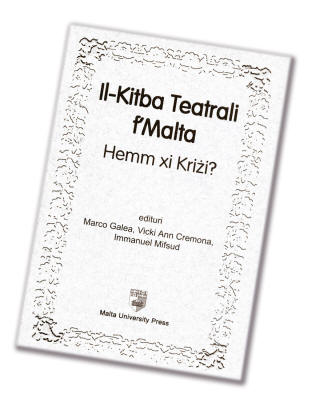
“Il-Kitba għat-Teatru Malti - Storja
ta’ Pannu u Qara’ Aħmar.” ( ‘Il-Kitba
Teatrali, Hemm xi Kriżi?”
(Malta University Press - 1998) jinkludi
lil Oreste Calleja fl-aħħar ġenerazzjoni importanti fl-istorja tat-teatru
Malti. Galea qal hekk fuq
din il-ġenerazzjoni ta’ drammaturgi li dehret wara Ebejer fis-snin
sittin. “Id-drammi
li Calleja kiteb bejn 1968 u l-1970 użaw
ħafna drabi l-ironija biex
jikkummentaw dwar soċjeta li f’għajnejn l-awtur dehret mingħajr
direzzjoni. Il-vantaġġ li kellhom dawn l-ewwel xogħlijiet ta’ Calleja
fuq xogħlijiet oħra ta’ qabilhom li ppruvaw joħolqu jew iwasslu
filosofija, kien illi kienu wkoll jiffunzjonaw tajjeb fuq il-palk
minħabba djalogi kredibbli, simboliżmu koerenti man-nisġa tad-dramm u
fuq kollox sarkażmu jew ċiniżmu moħbi taħt burdata apparentament
umoristika.” MARCO GALEA, in his study “The Make-do Tale of Writing for the Theatre” (Writing for the Stage – Is There a Crisis? – University Press, Malta 1998) includes Calleja amongst the latest important generation of writers in the history of Maltese Theatre. Talking about the playwrights who came after Ebejer in the Sixties, he says this about Oreste Calleja: "The plays Calleja wrote between 1968 and 1970 used irony to comment on a society which, in the author’s eyes, appeared to lack direction. The advantage that these plays had over previous plays which had tried to create or sustain a philosphical content, was that they worked well on stage due to a credible dialogue, the use of symbolism which was coherent with the play’s narrative framework and, above all, because of the saracasm and cynicism hidden under an apprarently humourous tone." |
|||
|
MARIO AZZOPARDI - A Brief Survey of Theatre in Malta |
|||
|
Oreste Calleja (b.1947) made his mark with biting satires on modern Maltese society, trapped in its hypocrisies, superstitions, and bureaucratic entanglements. His Ċens Perpetwu and Satira make bold use of surrealistic techniques which approach the savage humour of absurd farce. Oreste Calleja (1947) asserixxa ruħu b'satira taħraq fuq is-soċjetà moderna Maltija, maqbuda fl-ipokresija, is-superstizzjonijiet u l-burokrazzija mħabbla tagħha. Ċens Perpetwu u Satira għamlu użu qawwi minn teknika surrealistika li tasal biex tilħaq l-umoriżmu brutali tal-farsa ta' l-Assurd. |
|||
|
PALK MALTI KONTEMPORANJU NOTI BIJOGRAFIĊI ID-DRAMMI PUBBLIKAZZJONIJIET ARKIVJU |
|||